

Medical Director
Senior Consultant, General & Colorectal Surgeon
MBBS (Singapore), MRCS (Edinburgh), MMed (Surgery), FRCS (Edinburgh)
Ever found yourself having to plan your day around the nearest toilet, or feeling constantly drained without quite knowing why? Recurrent digestive symptoms can affect more than just your physical comfort—they can leave you feeling uncertain, frustrated and searching for answers
Inflammatory bowel disease (IBD) is one potential cause of ongoing issues like abdominal pain, diarrhoea and fatigue. Because these symptoms can overlap with many other conditions, getting a clear diagnosis is not always straightforward. Understanding how IBD is identified can help you feel more prepared and confident when seeking medical advice.
Understanding IBD
IBD refers to a group of chronic conditions that cause inflammation in the gastrointestinal tract. The two main types are Crohn’s disease and ulcerative colitis. While both involve inflammation, they affect different parts of the digestive system and behave in distinct ways, which is why an accurate diagnosis is so important.
Crohn’s Disease
Crohn’s disease can affect any part of the digestive tract, from the mouth to the anus. It most often involves the end of the small intestine and the beginning of the colon. Inflammation in Crohn’s disease can extend through multiple layers of the bowel wall, which may lead to deeper tissue damage over time.
Common symptoms include:
- Persistent diarrhoea
- Abdominal pain and cramping
- Blood in the stool
- Fatigue and fever
- Unexplained weight loss
- Mouth ulcers
- Perianal disease such as fistulas or abscesses
Ulcerative Colitis
Ulcerative colitis affects only the colon and rectum. Unlike Crohn’s disease, the inflammation is limited to the inner lining of the bowel. It usually begins in the rectum and may extend continuously along the colon.
Typical symptoms include:
- Diarrhoea, often with blood or mucus
- Abdominal discomfort, commonly on the left side
- Rectal bleeding or pain
- A frequent or urgent need to pass stool
- Fatigue
Why Accurate Diagnosis is Crucial
Getting the diagnosis right is essential because IBD shares many symptoms with other conditions such as irritable bowel syndrome, coeliac disease, infections and even colorectal cancer.
A delayed or incorrect diagnosis can lead to treatments that do not address the root cause, allowing inflammation to persist. Over time, this may result in complications such as strictures, fistulas or an increased risk of colorectal cancer. Early identification allows your doctor to start appropriate treatment, reduce inflammation and help protect long term bowel health.
The Diagnostic Process for IBD
There is no single test that confirms IBD. Instead, doctors rely on a combination of assessments to build a complete picture and rule out other possible causes. These include:
Medical History and Initial Assessment
Your first consultation will usually involve a detailed discussion about your symptoms. Your doctor will ask about how often they occur, how severe they are and whether anything seems to trigger them. Family history is also important, as genetics can influence the likelihood of developing IBD. This initial conversation helps guide which tests may be most appropriate for you.
Physical Examination
During the examination, your doctor will gently assess your abdomen for tenderness, swelling or any unusual masses. If Crohn’s disease is suspected, they may also check for signs around the anal area, such as fissures, abscesses or fistulas.
Laboratory Tests
Laboratory investigations help assess the body's systemic response to disease and rule out infection. These tests may include:
- Blood Tests: These can detect anaemia and markers of inflammation such as raised C-reactive protein levels
- Stool Tests: These are used to check for infections and detect markers like faecal calprotectin, which indicates inflammation in the intestines
Endoscopic Procedures
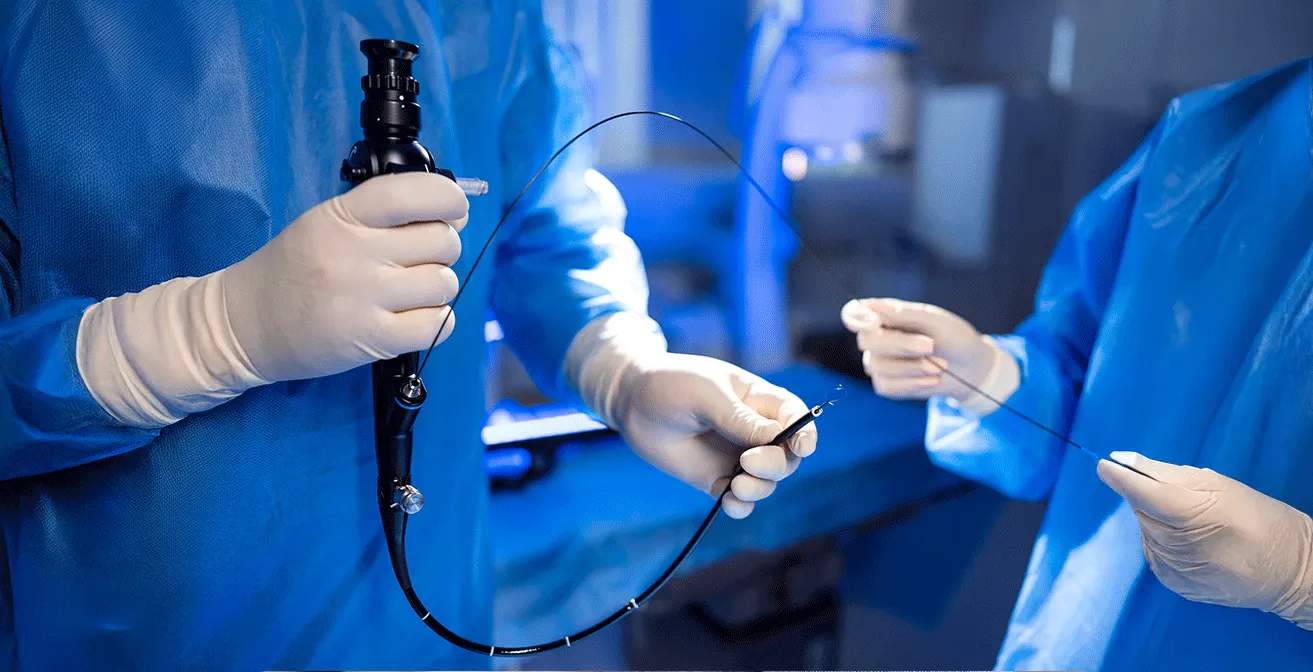
Endoscopy plays a central role in diagnosing IBD because it allows direct visualisation of the digestive tract.
- Colonoscopy with Biopsy: This is the main diagnostic procedure. It enables the doctor to examine the colon and the end of the small intestine and collect tissue samples. Biopsies are essential for distinguishing between Crohn’s disease and ulcerative colitis
- Gastroscopy (Upper Endoscopy): If upper digestive symptoms are present, this procedure allows the doctor to examine the oesophagus, stomach and the first part of the small intestine
Imaging Tests
When certain areas cannot be easily reached with endoscopy, imaging tests provide additional information.
- Computed Tomography (CT) Scans: Offers detailed images of the bowel and surrounding tissues and helps detect complications such as abscesses or obstruction
- Ultrasound: A non-invasive option used to assess bowel wall thickening and monitor disease activity without radiation exposure
Other Diagnostic Techniques
In some cases, additional tests may be needed to examine the small intestine more closely.
- Capsule Endoscopy: Involves swallowing a small camera that captures images throughout the digestive tract. It is particularly useful for detecting Crohn’s disease in the small intestine
- Balloon-Assisted Enteroscopy: A specialised technique that allows doctors to reach deeper sections of the small intestine for further examination or biopsy
Challenges in Diagnosing IBD
Even with modern tools, diagnosing IBD can take time. This is because symptoms and findings do not always present in a clear or consistent way.
Overlapping Symptoms
Symptoms such as diarrhoea, abdominal pain and urgency are not unique to IBD. They can also occur in conditions like IBS, which can make early differentiation challenging.
Variation in Disease Presentation
IBD can affect individuals differently. Some people may have significant inflammation with only mild symptoms, while others experience more noticeable discomfort despite less extensive disease.
Test Limitations
CeNo single test provides all the answers. Biopsies may occasionally be inconclusive, and certain parts of the small intestine can be difficult to access. As a result, doctors often combine multiple tests to reach a confident diagnosis.
Moving Forward with a Diagnosis
Receiving an accurate IBD diagnosis is the most important step towards regaining control of your health. Once the type and extent of IBD are identified, your doctor can create a treatment plan aimed at reducing inflammation and helping you achieve remission.
If you have been dealing with ongoing digestive symptoms, the team at The Surgeons offers a thoughtful and thorough approach to IBD evaluation. Under the care of Dr Chew Min Hoe, you will receive personalised assessment and guidance tailored to your condition. With the right support, you can move towards better symptom control and improved quality of life. Schedule a consultation today.
Frequently Asked Questions (FAQs) About IBD
How long does it take to diagnose IBD?
The time needed to reach a diagnosis can vary from person to person. In some cases, it may take a few weeks, while others may require a longer period as different tests are carried out. This step-by-step approach helps your doctor rule out other conditions and arrive at a clear and accurate diagnosis.
Is colonoscopy the only way to confirm IBD?
A colonoscopy is one of the most important tools used to diagnose IBD, as it allows the doctor to examine the bowel directly and take tissue samples. However, it is not used in isolation. Your doctor may also rely on stool tests, blood tests and imaging scans to build a more complete understanding of your condition.
Can IBD be diagnosed without invasive tests?
Non-invasive tests, such as blood and stool tests, can provide useful clues by detecting inflammation in the body. However, they cannot confirm IBD on their own or determine the specific type. To make a definitive diagnosis, endoscopic procedures and biopsies are usually required so that the bowel can be examined in detail.
Meet Our Colorectal Specialist in Singapore
Medical Director
Senior Consultant, General & Colorectal Surgeon
MBBS (Singapore), MRCS (Edinburgh), MMed (Surgery), FRCS (Edinburgh)
Dr Chew Min Hoe has devoted over 25 years of service to the public sector and was the founding Head of the Department of Surgery at Sengkang General Hospital (SKH). His clinical specialty is General and Colorectal Surgery with special niche interests in colorectal cancer, advanced pelvic tumours, hereditary conditions as well as perianal surgery. He is highly involved in education and research, and has published more than 100 peer-reviewed articles.