
Medical Director
Senior Consultant, General & Colorectal Surgeon
MBBS (Singapore), MRCS (Edinburgh), MMed (Surgery), FRCS (Edinburgh)
If your doctor has recommended a colonoscopy, you may be wondering how much the procedure can actually reveal. Can it detect cancer with certainty? Will it identify the cause of your symptoms? Or could problems still be missed despite a normal result?
While no medical test is completely flawless, colonoscopy is one of the most effective ways to examine the lining of the colon and rectum. Understanding what it can detect, what influences its accuracy and where its limitations lie can help you better interpret the results and make informed decisions about your ongoing care.
Why Is Colonoscopy Commonly Used to Examine the Colon?
Unlike imaging tests that provide indirect views of the bowel, a colonoscopy allows your doctor to examine the lining of the colon and rectum directly using a flexible tube fitted with a camera.
During the procedure, your doctor can:
- Identify abnormal growths such as polyps
- Detect areas of inflammation
- Assess ulcers or sources of bleeding
- Take tissue samples (biopsies) for laboratory analysis
- Remove certain polyps when appropriate
Because it allows direct visual examination while also enabling biopsies and the removal of some polyps during the same procedure, colonoscopy is commonly used to investigate bowel symptoms and screen for colorectal cancer.
How Accurate Is Colonoscopy?
Colonoscopy is highly accurate for detecting significant abnormalities within the colon, particularly when the bowel has been well prepared and the procedure is performed carefully.
Its accuracy depends on several factors, including:
- The quality of bowel preparation
- The size and location of any abnormalities
- The experience of the doctor performing the procedure
- The amount of time spent carefully examining the colon
What Conditions Can Colonoscopy Detect?
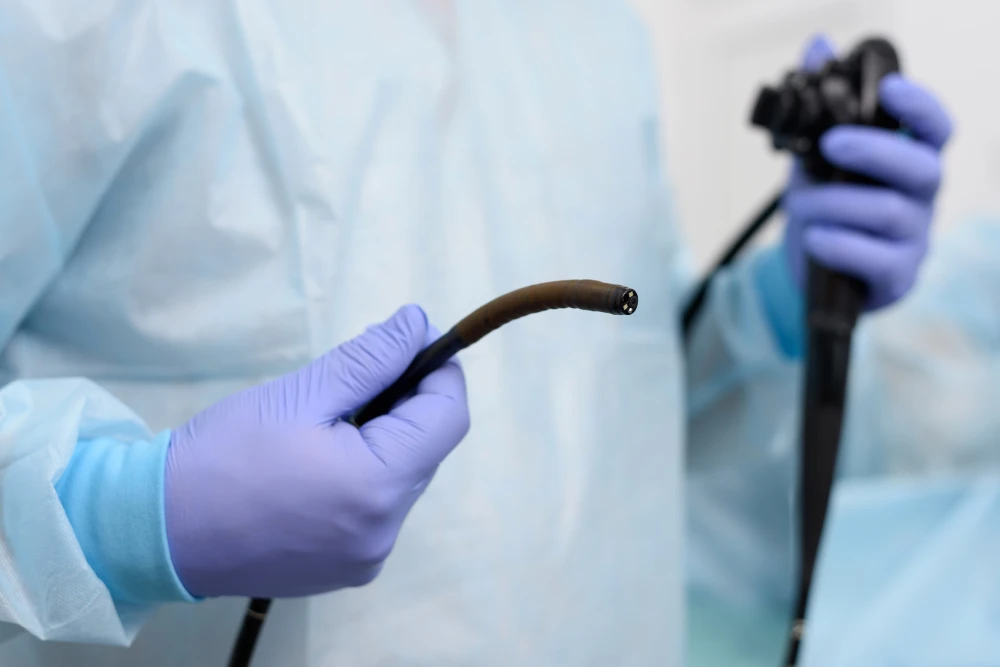
Once the colon has been examined, your doctor can assess whether any abnormalities are present and determine whether further investigation or treatment is needed. A colonoscopy may help detect several conditions affecting the colon and rectum, including:
Colorectal Polyps
Polyps are abnormal tissue growths that develop on the lining of the colon. Although many are harmless, some can gradually develop into colorectal cancer over time.
One of the greatest advantages of colonoscopy is that many polyps can be removed immediately after they are detected, reducing the risk of future cancer development.
Colorectal Cancer
Colonoscopy is one of the most effective methods for detecting colorectal cancer, particularly in its early stages when treatment is often more successful.
During the procedure, suspicious growths can be biopsied to confirm the diagnosis without requiring additional surgery.
Inflammatory Bowel Disease
Conditions such as ulcerative colitis and Crohn's disease can cause chronic inflammation of the bowel lining.
A colonoscopy allows your doctor to assess the pattern and severity of inflammation while obtaining biopsies that help distinguish between different inflammatory conditions.
Diverticular Disease
Small pouches known as diverticula commonly develop with age. A colonoscopy can identify these pouches and help determine whether they may be contributing to symptoms such as bleeding or changes in bowel habits.
Sources of Gastrointestinal Bleeding
If you have unexplained rectal bleeding or iron deficiency anaemia, a colonoscopy can help identify potential causes, including polyps, ulcers, inflammation or blood vessel abnormalities.
What Are the Limitations of Colonoscopy?
Although colonoscopy is highly reliable, it is important to understand that no diagnostic test is completely perfect.
Certain factors may reduce its accuracy.
Inadequate Bowel Preparation
If stool remains inside the colon, it may obscure small polyps or other abnormalities. In some cases, your doctor may recommend repeating the examination if the bowel preparation is insufficient.
Very Small or Flat Lesions
Tiny polyps or flat lesions may be more challenging to detect than larger growths. Modern imaging techniques, careful examination and adequate withdrawal time help improve detection of these subtle abnormalities.
Incomplete Examination
Occasionally, the entire colon cannot be examined due to factors such as severe narrowing, extensive inflammation or technical difficulties. If this occurs, additional investigations such as CT colonography may be recommended.
Understanding What Your Colonoscopy Results Mean
While no diagnostic test can identify every abnormality with complete certainty, a well-performed colonoscopy provides highly reliable information that helps guide diagnosis, treatment and future screening recommendations.
If you have persistent bowel symptoms or are considering a colonoscopy, book a consultation at Thesurgeons, an endoscopy clinic in Singapore. Under the care of Dr Chew Min Hoe, you will receive a comprehensive assessment and personalised advice to help you understand your options and the most appropriate next steps.
Frequently Asked Questions (FAQs) About Colonoscopy Accuracy
Is colonoscopy still accurate if I do not have any symptoms?
+
Yes. Colonoscopy is commonly performed in people without symptoms because it can detect polyps and early-stage colorectal cancer before they cause noticeable signs or symptoms. This is one reason it plays an important role in colorectal cancer screening.
Are all polyps found during a colonoscopy cancerous?
+
No. Most polyps are non-cancerous, but some have the potential to develop into colorectal cancer over time. Removing polyps during a colonoscopy can help reduce the risk of cancer developing in the future.
Can previous bowel surgery affect the accuracy of a colonoscopy?
+
Previous bowel surgery may alter the anatomy of the colon, which can make the examination more technically challenging in some patients. Your doctor will take your surgical history into account when planning and performing the procedure.
Meet Our Colorectal Specialist in Singapore
Medical Director
Senior Consultant, General & Colorectal Surgeon
MBBS (Singapore), MRCS (Edinburgh), MMed (Surgery), FRCS (Edinburgh)
Dr Chew Min Hoe has devoted over 25 years of service to the public sector and was the founding Head of the Department of Surgery at Sengkang General Hospital (SKH). His clinical speciality is General and Colorectal Surgery with special niche interests in colorectal cancer, advanced pelvic tumours, hereditary conditions as well as perianal surgery. He is highly involved in education and research and has published more than 100 peer-reviewed articles.